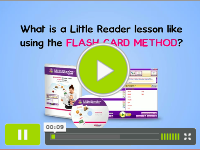
This lesson uses the flash method, which involves rapid flashing of words or pictures to your child, taking advantage of your child's right-brain ability to absorb large quantities of information rapidly. These lessons simulate physical flash cards being flashed quickly to your child. The lessons here are set to be auto-forwarded so you only need to let your child watch them. Typically, eighteen words (six words from three Categories) are shown each time - at first (Session 1) the words are flashed as they are listed, and the next time (Session 2) the words are flashed in a random order.
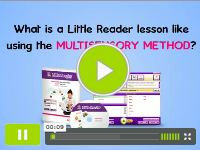
This method works by involving as many of your child's senses as possible. The most important thing to remember here is to interact with your child as much as possible. Let your child not only see and hear the word, but also feel the word whenever appropriate. For example, help her clap her hands for the word 'clap', rub her ear for the word 'ear', and let her feel yellow objects for the word 'yellow'. If you can engage the sense of smell and taste too, then even better!
The lessons are set to be manually forwarded (either by clicking on the mouse or pressing the spacebar), so take as much time as you need. Where appropriate, run your finger under the words as the words are read, so that you indicate the direction of reading.
Typically, six words from three Categories (eighteen words in total) are shown.

Pattern Phonics™ lessons are used to give your child an intuitive understanding of the sounds of letters and how words can be broken up into different parts. This is done by showing a series of words grouped together in a coherent way (for example, words beginning with 'b') and color-coding the words to make the patterns obvious.
Lessons are delivered like Word Flash lessons - fast, and auto-forwarded. Pattern Phonics™ lessons begin on the fifth week on Day 21.

Want to EDIT and CREATE your own lessons? Unleash these FULL editing features by getting a PRO KEY for LITTLE READER!

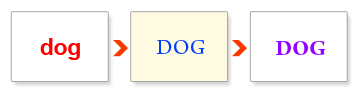
You can customize your flash mode lessons by changing the font type, color, background and letter-casing of the words!
Change font size, colors and letter casing for words
Keep lessons exciting by randomizing the setting - Your baby will see different pictures, hear different
pronunciations and picture audio for each lesson!
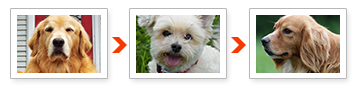

If you want to teach personal concepts such as 'MOM,' 'DAD,' or 'FAMILY,' you can easily use your own pictures, pronunciations and videos to make lessons more meaningful to you and your child.
Personalize your lessons by attaching your own family pictures, objects around your house, or video of your day to day activities!
 Mia and Greg
former and current 6th Grade English Teachers
"Little Reader should be in everybody's home."
Watch the video
Believe in our products? Recommend them to others and earn a commission!
Learn more.
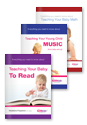
Can young children really be taught math, music or to read? and if they can, should they? Find out more with these eBooks.

We're convinced Little Reader is so effective, we guarantee that you will very satisfied with the product or we'll give you your money back!